|
|
PhoenixThread
2.0.1
Multi-thread programming tools in C++
|
|
|
PhoenixThread
2.0.1
Multi-thread programming tools in C++
|
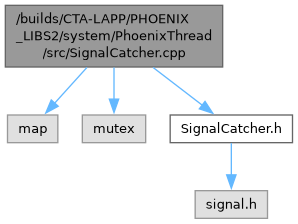
Go to the source code of this file.
Classes | |
| struct | SignalHandler |
| Handles signal with boolean an mutex. More... | |
Functions | |
| void | phoenix_addSignalCatcher (int signalType) |
| Add a signal catcher to handle the given signal. | |
| bool | phoenix_isSignalRecived (int signalType) |
| Check if the given signal has been recived by the program (or a thread). | |
| void | phoenix_sig_handler (int signum) |
| Signal handler. | |
Variables | |
| std::map< int, SignalHandler > | phoenix_mapSignalHandler |
| Map of signal handlers. | |
| void phoenix_addSignalCatcher | ( | int | signalType | ) |
Add a signal catcher to handle the given signal.
| signalType | : type of the signal to be handled You should always call this function into your main thread |
Definition at line 40 of file SignalCatcher.cpp.
References SignalHandler::expectedSignal, SignalHandler::isSignalRecieved, phoenix_mapSignalHandler, and phoenix_sig_handler().
| bool phoenix_isSignalRecived | ( | int | signalType | ) |
Check if the given signal has been recived by the program (or a thread).
| signalType | : type of signal to check |
Definition at line 51 of file SignalCatcher.cpp.
References phoenix_mapSignalHandler.
| void phoenix_sig_handler | ( | int | signum | ) |
Signal handler.
| signum | : recived signal |
Definition at line 28 of file SignalCatcher.cpp.
References phoenix_mapSignalHandler.
Referenced by phoenix_addSignalCatcher().
| std::map<int, SignalHandler> phoenix_mapSignalHandler |
Map of signal handlers.
Definition at line 23 of file SignalCatcher.cpp.
Referenced by phoenix_addSignalCatcher(), phoenix_isSignalRecived(), and phoenix_sig_handler().
 1.17.0